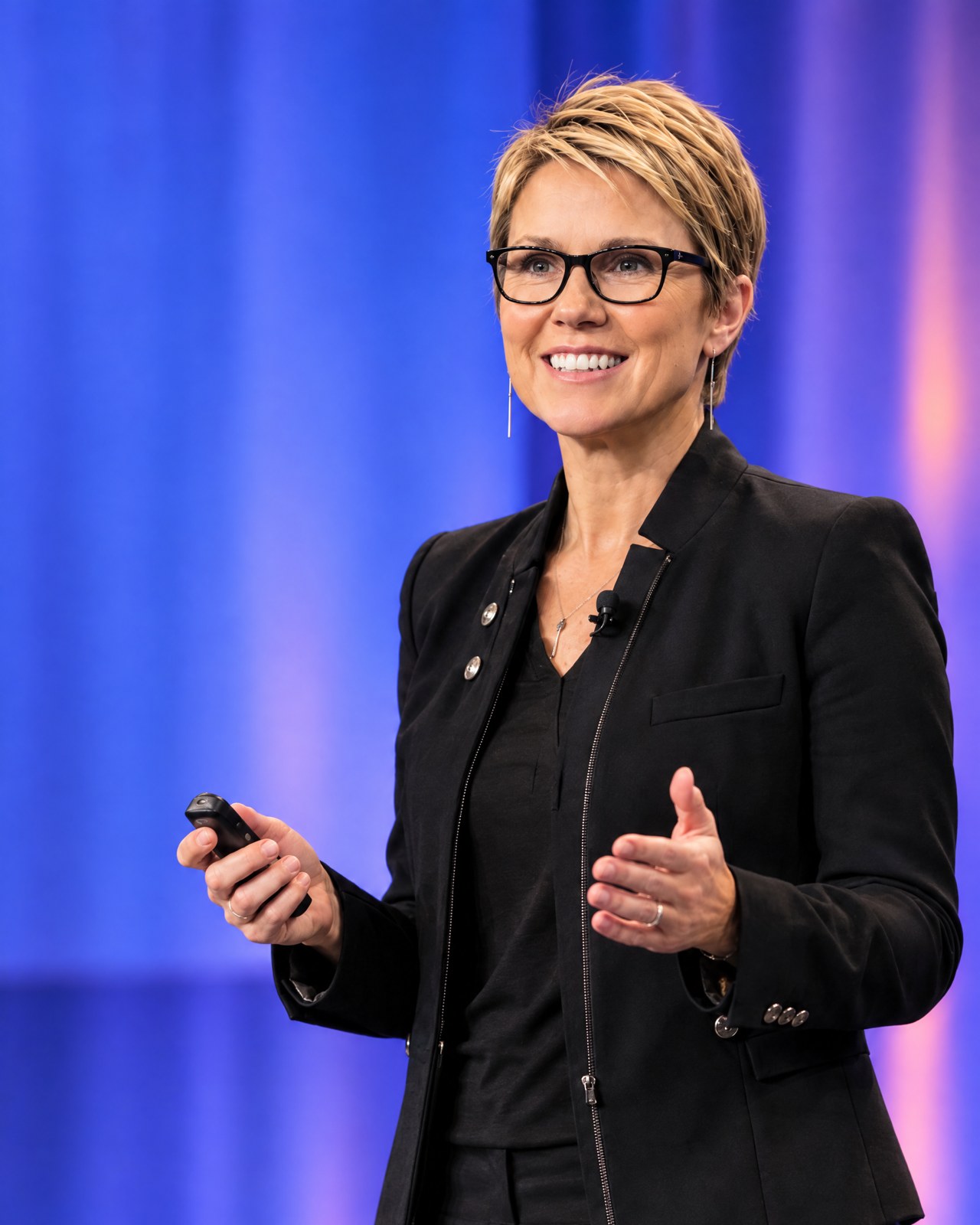
I build complicated things. Then I make people care about them.
I’ve spent more than 25 years building businesses, developing technology, and translating complex ideas into stories people understand. Today I bring that experience to executive storytelling and AI-powered content production, from finding the point of view to building the system that delivers it.
The point of view first.Then the system that delivers it.
26 yrsin reproductive health, 20 of them in clinic
1patent awarded, plus 1 provisional
500K+social audience built founder-first
#1of 19 MenuFit creators by views in my first 10 days
What I’m doing now
Brand storytelling & AI‑powered content production
Independent Creative Strategist · 2025 to present
After building audiences for my own companies, I now create content for brands including Procter & Gamble, Stripes and MenuFit.
Procter & Gamble
Stripes
MenuFit
Vidaya
Growplex
WHIPP
Develop distinctive, platform-native content for consumer brands, adapting storytelling, messaging and creative execution to different products and audiences.
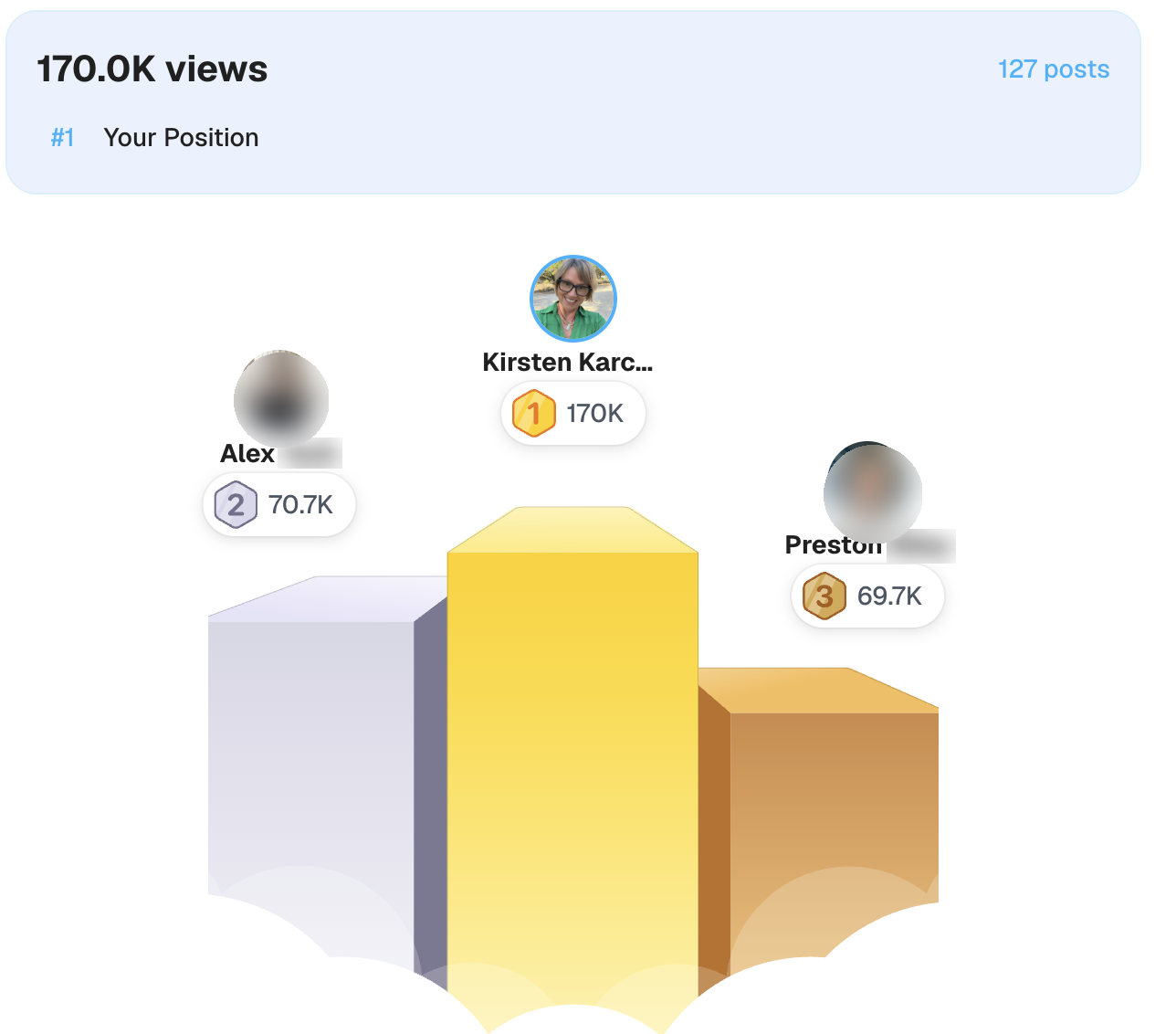
Ranked #1 among 19 creators in MenuFit’s content program, with 168,800 views in 10 days, 2.4× the reach of the second-place creator.
Built an AI-assisted production workflow covering ideation, scripting, filming, editing and cross-platform distribution, so high-volume content gets made without a traditional creative team.
Selected work
Three case studies. Proof, not adjectives.
Case study 01 · Inventor + founder
Conceivable: turning a clinician’s way of thinking into technology
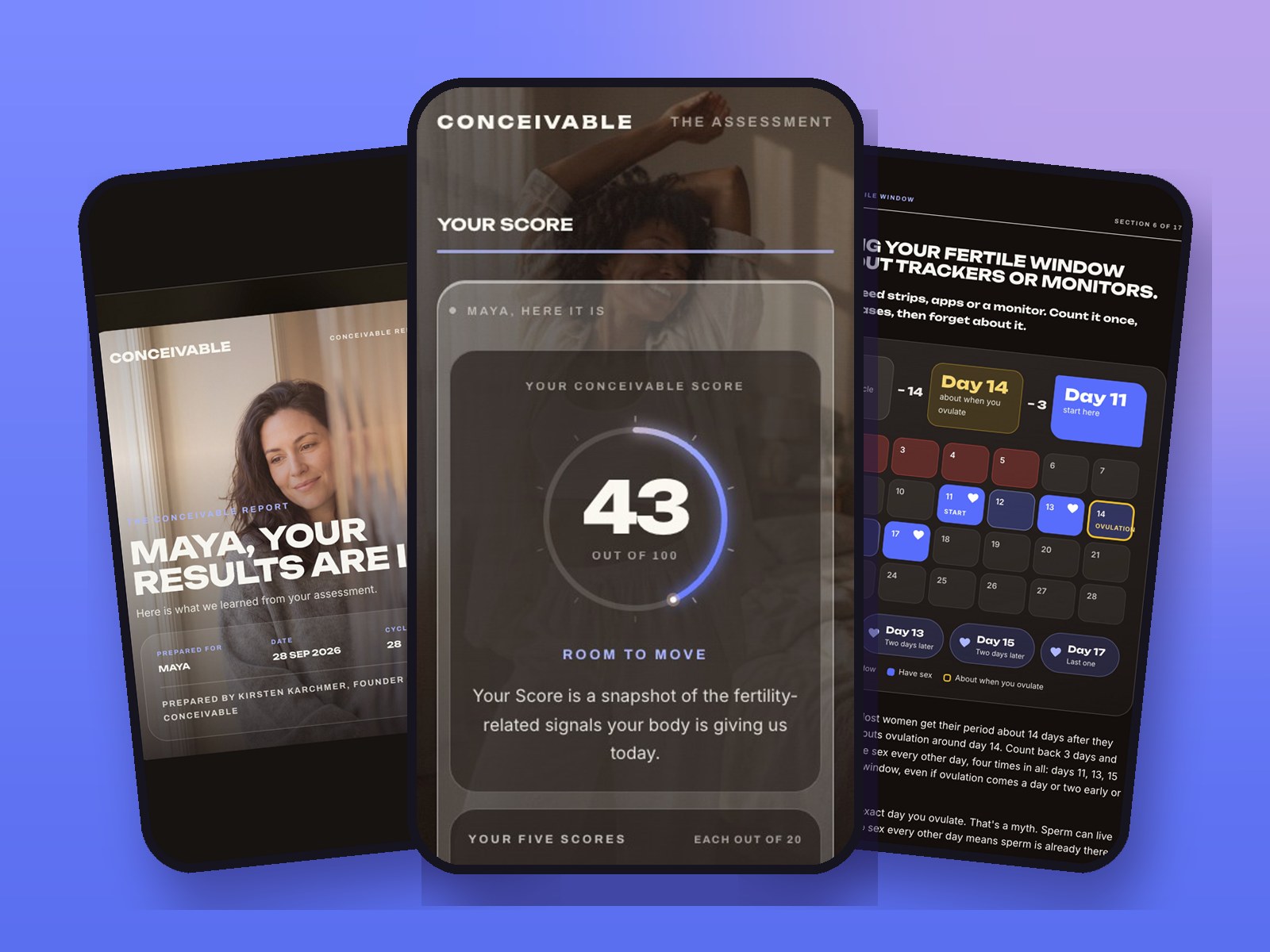
After 20 years in clinical practice with about 10,000 women, I kept seeing the same thing: the signs that a woman’s reproductive system wasn’t running at its best were sitting in plain sight, in her cycle and her temperatures. I founded Conceivable to turn that clinical reasoning into software.
What the patent covers
US Patent 10,467,382 B2, Conceivable basal body temperatures and menstrual cycle, granted November 2019. I’m a named inventor with two co-inventors. It covers a mobile-app method that uses cycle, lifestyle and basal body temperature data to find where a woman’s patterns depart from an optimal fertility state, and to match personalized recommendations to what it finds.
What the product is designed to do
The product has grown past the patent. It’s designed to identify subclinical factors, score where a woman stands, individualize what she does next, and learn from her feedback through Kai, its AI guide. These are product features, not patent claims.
The storytelling job: make a patent about basal body temperature mean something to a woman who’s been trying for a year.
Conceivable: building the audience before the ad budget
I built Conceivable’s audience the founder-led way: by being the person on camera, on the page and on the mic, explaining women’s health plainly enough that people passed it on.
When MenuFit brought me into its creator program, I didn’t just film videos. I built the system around them: scripts modeled on what was already going viral, a filming plan, AI-assisted editing, scheduled distribution, and a review of what worked that shaped the next batch of scripts.
168,800views in my first 10 days
#1in views out of 19 creators
2.4×the reach of the second-place creator
MenuFit’s creator leaderboard, November 2026, at 170K views. Other creators’ faces and last names blurred.
Executive voice
Your expertise, in a voice people actually listen to.
Most leaders don’t lack ideas. They lack the one sentence that makes the idea stick, and a way to say it again next week.
I’ve done this for my own companies for two decades, from clinic floors to stages to a 30-second video. Here’s how I work with a founder or expert.
01
Interview
I interview founders and experts the way I interviewed patients for 20 years: listening for the thing they say three times without noticing.
02
Find the point of view
Every expert has one idea only they can say. I find it, name it, and test it against what the audience already believes.
03
Translate complexity
Patents, clinical research, technical products. I turn them into plain language without dumbing them down.
04
Create recurring formats
One-off posts don't build a voice. Formats do: a series, a signature segment, a question people come back for. My newsletter, The Second Opinion, is one.
05
Make it platform-native
One insight becomes a short video, a LinkedIn post, a newsletter and a keynote, each built for how people actually use that platform.
The production system
From one recording to a week of content.
This is the workflow I run today. Everything marked “In use” is how my current content gets made. “Building next” is where it’s headed.
01
Capture
Lives, interviews, voice notes and long recordings.
In use
02
Find the story
Transcripts read for the point, not the clock. Every cut lands on meaning.
In use
03
Create
Scripts modeled on what's working right now, written in the speaker's own voice.
In use
04
AI-assisted production
Transcription, captions, audio leveling, overlays and b-roll, with a human making the final cut.
In use
05
Publish
Scheduled to YouTube and Facebook from one place, with TikTok and Instagram versions ready to post.
In use
06
Learn
Every batch reviewed against what performed. What wins becomes the rules for the next scripts.
In use
Building next
Performance data flowing straight back into the next script drafts, without me pulling the numbers by hand.
Hiring for executive storytelling, content strategy or AI-powered content production? Or building something that needs its story told? Tell me what you’re working on.